Why Your Meta Ads Aren’t Working
Over the past year, I’ve worked with a few Instagram-first brands on their websites, analytics, and Meta ads.
One thing I’ve noticed is that many brands jump straight into running ads without setting up the foundations properly.
When sales don’t come, the conclusion is usually:
“Meta ads don’t work for my business.”
But most of the time, the issue isn’t the ads.
It’s the setup.
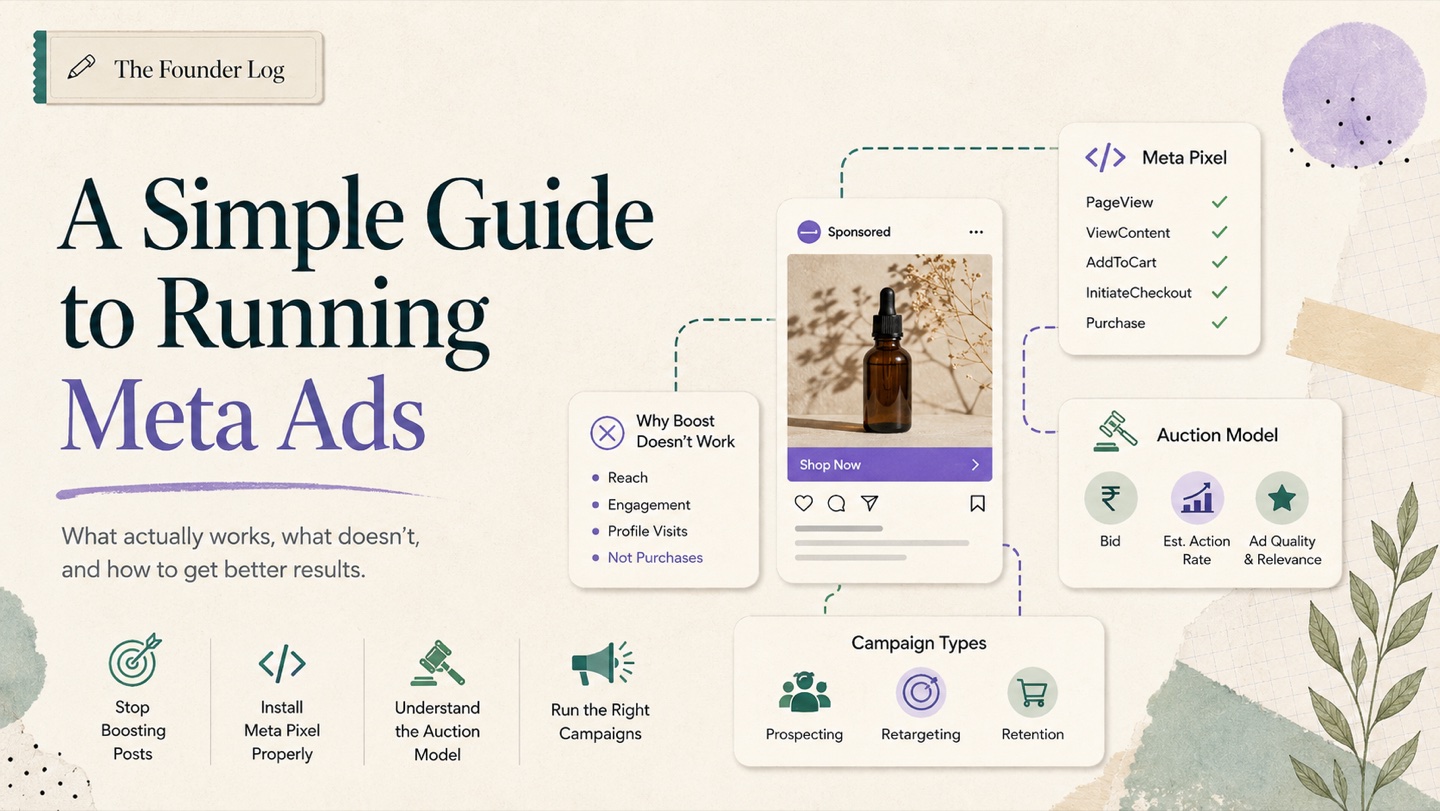
1. Stop Boosting Posts
This is probably the biggest mistake I see.
Boosting a post is easy.
Meta shows a button.
You choose a budget.
You select an audience.
You click publish.
But boosting is designed to make advertising easy, not necessarily effective.
When you’re boosting, Meta has limited information about what success actually looks like.
Most boosted campaigns optimize for:
- Reach
- Engagement
- Profile visits
Not purchases.
And likes don’t pay the bills.
2. Why Your Website Matters More Than You Think
Many brands focus entirely on Instagram.
But your website is where conversions happen.
When someone clicks on an ad, Meta needs to know:
- Did they view a product?
- Did they add to cart?
- Did they begin checkout?
- Did they complete a purchase?
Without that information, Meta is flying blind.
It’s trying to find buyers without knowing who actually bought.
3. Install Meta Pixel Properly
This is the foundation of everything.
The Meta Pixel tracks what visitors do on your website.
A good setup should send events such as:
- Page View
- View Content
- Add To Cart
- Initiate Checkout
- Purchase
Every event helps Meta understand customer behaviour.
Over time, Meta learns:
“People who look like these buyers are more likely to purchase.”
That’s where the real power of ads comes from.
Not targeting.
Not interests.
Data.
4. Meta Ads Are an Auction
Many people think Meta simply shows ads to everyone.
That’s not how it works.
Every time a user opens Instagram or Facebook, Meta runs an auction.
Thousands of advertisers compete for that attention.
Meta chooses which ad to show based on:
- Bid
- Estimated action rate
- Ad quality and relevance
This means the highest bidder doesn’t always win.
The advertiser most likely to generate a positive outcome often wins.
That’s why better creatives and better conversion data matter.
5. What Campaigns Should You Actually Run?
A simple structure works for most ecommerce brands.
Prospecting Campaigns
Goal:
Find new customers.
Target:
- Broad audiences
- Lookalikes
- Interest-based audiences
Optimization:
Purchase
This is where growth happens.
Retargeting Campaigns
Goal:
Bring back people who already showed intent.
Examples:
- Website visitors
- Add-to-cart users
- Instagram engagers
- Video viewers
These audiences are usually cheaper to convert.
Retention Campaigns
Often ignored.
Target existing customers with:
- New launches
- Restocks
- Seasonal collections
- Upsells
Selling to an existing customer is often easier than acquiring a new one.
6. Give Meta Enough Data
Many brands make changes too quickly.
A campaign runs for two days.
No sales.
Everything gets changed.
New audience.
New creative.
New objective.
Then the cycle repeats.
Meta needs data.
The algorithm learns from conversions.
Constantly restarting campaigns prevents that learning from happening.
Patience is often part of the strategy.
7. Ads Can’t Fix a Broken Funnel
This is something I learned while working with brands.
If the website is slow,
if the checkout is confusing,
if the product pages don’t build trust,
more traffic won’t solve the problem.
It simply sends more people into a broken funnel.
Before increasing ad spend, make sure:
- Website loads quickly
- Product pages are clear
- Checkout works smoothly
- Pixel tracking is correct
Final Thoughts
Meta ads are not magic.
They’re a distribution engine.
The brands that get the best results usually have three things in place:
- A good product.
- A website that converts.
- Accurate tracking data.
Once those foundations exist, Meta’s algorithm becomes incredibly powerful.
And that’s when advertising starts feeling less like gambling and more like a system.
DID THIS RESONATE?
A little encouragement.
If something here stayed with you, leave a clap.
— claps
A little encouragement goes a long way.
KEEP THE CONVERSATION GOING
What’s on your mind?
A question, a different perspective, or a story of your own. I’d love to hear it.
The conversation
Loading the conversation…